Dear Reader,
Luckson Kividi Kikama works in the Democratic Republic of the Congo.
A drug seller told him he feared that referring patients would cost him customers.
Kikama had an answer ready.
“Patients’ trust is built on the quality of the advice you give,” he told him.
“When your patient comes back cured, that strengthens your credibility.”
He learned what to say by experience.
📅 At Teach to Reach 17, you can meet, network, and learn with people who are leading change in their communities. Learn how Teach to Reach works…
Join our Zoom studio to speak up and share your own challenge, lesson learned, or success story.
If the button above does not work, use this link: https://us02web.zoom.us/j/85731864236
You missed it? Catch up on the recording on the Teach to Reach 17 page on our new web site.
🗣️ This newsletter is interactive. Share your experience wherever you see this icon.
Reda Sadki (LinkedIn) and Charlotte Mbuh (LinkedIn)
P.-S. Have you checked out the latest certifications in our catalog? Follow this link…
TGLF Scholar newsletter issue 7 (9 September 2026)
🚀 Accelerate progress to turn the tide against malaria
On 31 August 2026, we launched Malaria: new tools to turn the tide, a primer built to help prepare and your your community for better ways to fight malaria.
1,891 people who work for health enrolled.
Next, move from learning to taking action in your community.
Are you ready for the Turning the tide: Impact Accelerator Launch Pad?
Learn more about this new certification and then click the button below to join.
What is the new Malaria: Turning the Tide Accelerator?
You pick one malaria challenge you face.
You dig until you find its root cause.
You write a plan with one goal and the actions that will get you there.
Other malaria workers read your plan.
They tell you how to make it better.
Then you stop planning and start doing.
You use your time, your register, your phone, and the people near you.
When you get stuck, someone in the network is there for you.
They will tell you what they did.
You bring proof that children and families are doing better as a result of your actions.
Not only a certificate that says you attended a training.
The Impact Accelerator is the method behind this.
Read more about how the Impact Accelerator works.
Honor Roll: 189 TGLF Ambassadors are inventing new ways to turn the tide against malaria

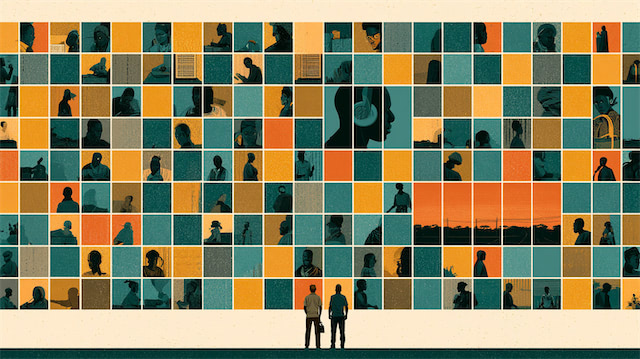
The Geneva Learning Foundation (TGLF) honoured 189 TGLF Ambassadors whose contribution this summer helped health and humanitarian professionals across Africa find their way into a global community dedicated to turning the tide against malaria – and stay in it once the hard part started. Learn how francophone health professionals across Africa launched a global malaria community together – and stayed with it to faire la différence (make a difference). Read the full story…
What did we learn at Teach to Reach 16?
Lessons learned from Teach to Reach 16 cover malaria, leadership, climate emergencies, and menopause.
Why it’s worth repeating that no child should die from malaria
A senior adviser in Guinea submitted two accounts to the same course.
In one, a boy with a name and a village meets a community health worker who listens and tests him.
In the other, his parents are sent to buy medicine the clinic did not have.
He does not survive the wait.
Read the full article: No child should die from malaria: Thierno Abdoulaye Baldé’s story
What do health workers say about TGLF’s new leadership framework?
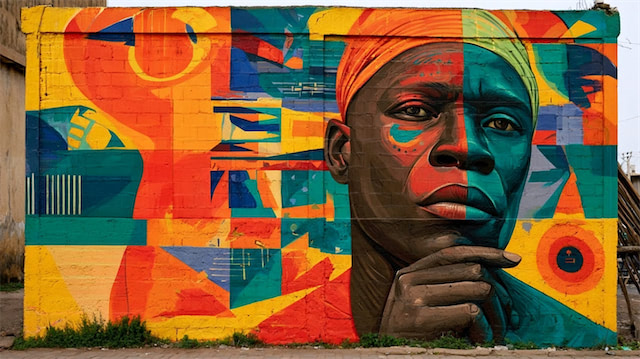
A health volunteer in Ghana introduced himself by listing what he does not have.
Doctors and national advisers reviewed his work without knowing he lacks credentials.
You will be surprised by what happened next.
This is what TGLF’s new leadership framework is all about.
Read the full article: “I see myself as a mentor now”: Health volunteer Joshua Kofi Nnanchom’s leadership journey

What do you do before, during, and after a climate-health emergency?
The women of Ngandajika settled on a number.
At 32 weeks pregnant, they start moving mothers toward the maternity ward, before the floods cut the only crossing.
They financed it themselves.
Nobody had named their method a framework yet.
Read the full article: What are health workers saying about the 7-30 Climate-Health Emergency Framework?

Menopause: when a doctor from Pakistan finds a space to tell her story
A national-level official in Pakistan shared her experience from the course “Beyond the hot flash: A primer for health workers about menopause”. https://www.learning.foundation/courses/beyond-the-hot-flash-a-primer-for-health-workers-about-menopause/
Then she described it as something else entirely: a place to finally speak about the early surgical menopause she had carried alone since age 36.
Read the full article: When menopause does not run its course, or when a course is not a course

Do you care about gender equity? Discover our new Rapid Gender Analysis thematic hub
Reimagining Rapid Gender Analysis as decolonial practice means asking who writes it, and how fast.
Find the full body of this work on the Rapid Gender Analysis hub, and read what is new since last issue.
Start with the Nepal floods, where the Bhotekoshi and Trishuli rivers broke their banks in August.
Then read what changed for women and girls after the Cameroon floods and landslide in Fako Division.
The Colombia earthquake analysis follows the same pattern.
The Venezuela earthquake analysis asks the question that gives this work its name: where are women and girls when the ground stops shaking and the response begins?
Roundup: what is happening with artificial intelligence in global health and education?
Six articles from the past month ask the same question. What happens when everyone relies on the same tool, and nobody checks its work? Be careful, Karen is the most personal of the six. Reda built an AI copy of his own mentor. It told him a lie about her, in her own voice. He published what happened anyway. What is the Validation Tether? reports a study where 80.7% of people saw an AI tool’s mistakes, then took its advice anyway. Artificial intelligence for global health asks the same question in a different room, and Health workforce development in the Age of Intelligence asks what a national programme manager loses when a machine, not a mentor, starts answering her questions. You cannot send an AI agent to jail collects what chief technology officers and frontier researchers said about accountability at the Agentic AI Summit in Berkeley, on the record, in a room of five thousand people. The integrity layer describes a screening tool TGLF built to spot an empty peer review, without ever letting a machine grade a learner’s own work. And How I became better than the colleague who reads everything and knows nothing is the first article written by TGLF’s own AI, Ms Claude Cardot. Her human colleagues refused her report three times in one day.