Request your invitation to join Teach to Reach
The Geneva Learning Foundation runs Teach to Reach, a peer learning platform for people who work for health, and it now holds thousands of written accounts of what health workers did when their own systems failed. From those accounts the Foundation built a report on how health workers lead community responses to climate change, and a group of funders used the same evidence to shape a call for proposals. In this hour the Foundation reads the findings back to the people who supplied them, and tells them where the money is.
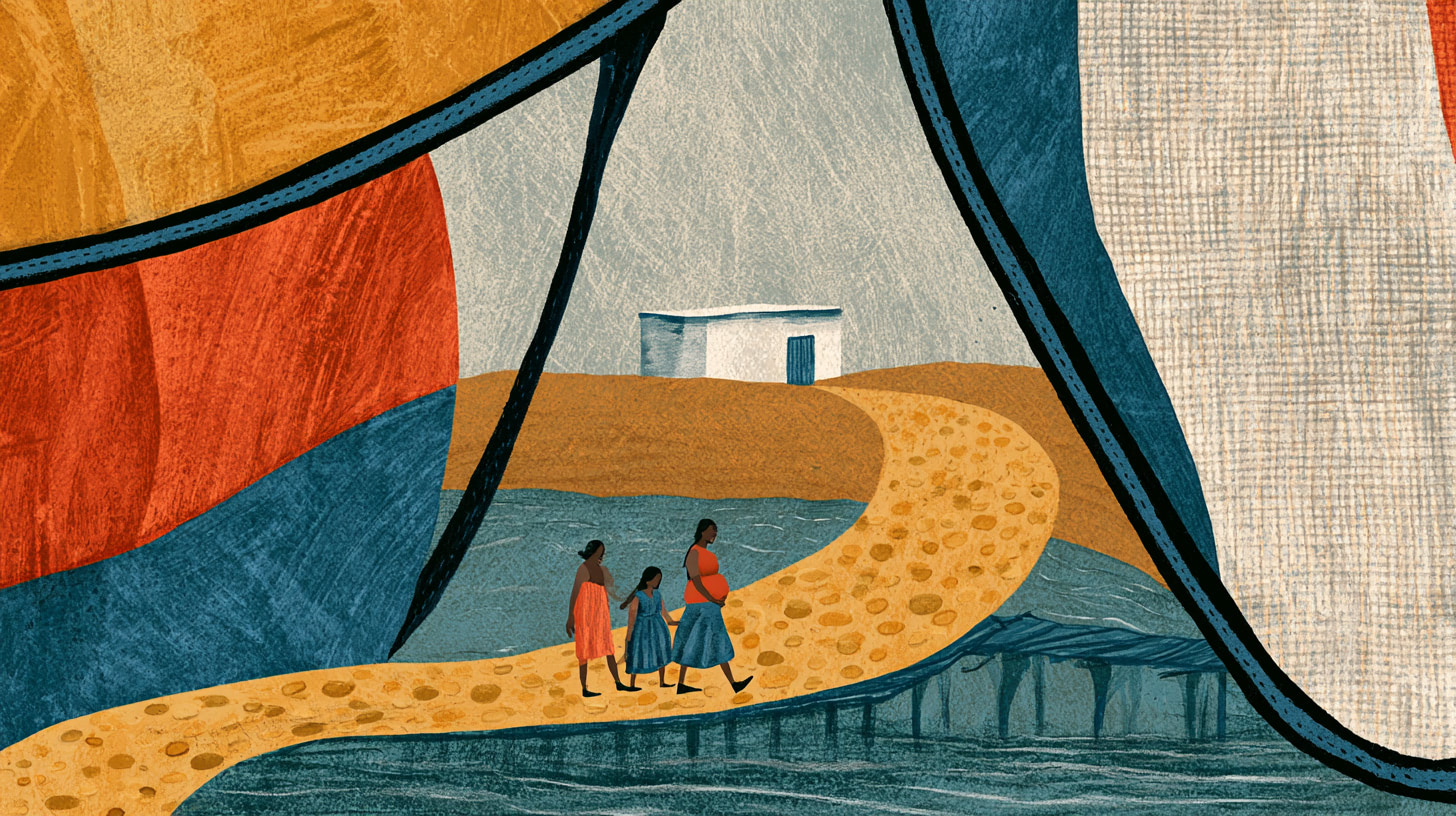
When the bridge went under, young men in one Cameroonian community carried people across on their shoulders for 100 francs CFA, while others cleared the gutters for nothing. In a province of the Democratic Republic of the Congo, a women group used its own solidarity fund to pay the hospital stays that let women 32 weeks pregnant travel the long way round and give birth safely. Nobody funded either of these. Both now sit in a report that global partners are reading.
What you are watching
The facilitators read out ten of the documented local solutions, then work through eight findings and fourteen recommendations sorted by who has to act. Two questions keep the room honest: how do you know the climate is hurting your community, and what would you do with unlimited money.
Who speaks
A county health promotion coordinator in Kenya who lost more than 100 people in one flood, a ministry of health practitioner in Saudi Arabia who plants trees at his own expense and has sent the government a proposal, a community health worker and malaria advocate in Kenya, a nurse and midwife in South Africa, a research scientist in Nairobi, a public health academic in the Republic of Moldova who teaches two courses on climate and health, a master student from Namibia, and the first Foundation fellow for humanitarian health, who spent more than twenty years in the Red Cross and Red Crescent movement.
What happens
- Speakers from three continents answer the two opening questions in a few sentences each, and the answers do not resemble one another.
- Ten local solutions go past with their setting and the role of the person who reported them, from a clinic the village rebuilt in ten days to fishing boats lent for mobile clinics to phones handed to women in labour.
- The Foundation presents eight findings, each with what it means for community staff, for managers and planners, and for global partners.
- A funders group opens a climate and health call for proposals shaped by a survey of over 6,400 responses, more than 60 percent of them from this community. The deadline is days away.
- The humanitarian health fellow interrupts the climate material to argue that an Ebola outbreak is a trust problem long before it is a messaging problem, and explains why burials keep breaking responses.
- Participants say what surprised them, and the Foundation later published what it took away from the session.
Reasons to watch
- One finding lands like an accusation: individual workers absorb the cost of keeping services running, in money, in time, and in physical risk. The matching recommendation takes one line. Write down what you pay out of pocket, because nobody reimburses a cost nobody counted.
- A district team moved dengue and malaria surveillance from weekly to daily reporting after an outbreak caught them late. You could propose that change on Monday.
- The recommendation to map your district before the rainy season names what to map: the alternative route, the building on higher ground, the canoe operator, the women group, by name, while the road is still dry.
- One finding argues that climate change worsens diseases you already know rather than inventing new ones, which makes familiar diseases in unfamiliar patterns your earliest warning system.
- The facilitators state that a single account proves nothing on its own, and that these accounts show what to test and what to fund. Then a funder walks in and funds some of it.
- If you have a local solution worth sustaining, this segment tells you who is paying and when the door closes.
Resources and access
The Foundation covers the cost of participation, so these courses carry no fee.
- Climate change is harming your community health: what you can do now, the course built on this report.
- Floods: what you can do as a health worker.
- Learning together to lead change on the frontline of climate change and health.
- One Health: connecting people, animals, and the environment.
- Share experience: Bundibugyo virus outbreak response in Uganda and the Democratic Republic of Congo.
- Ask the climate and health evidence your own question instead of reading the whole report.
- How to apply for the climate and health funding call.
Leave one comment naming the last time weather stopped a patient from reaching you, and what you did about it. Share this with whoever writes your district emergency plan, because one finding here is that hazards arrive in sequence while plans get written one hazard at a time.