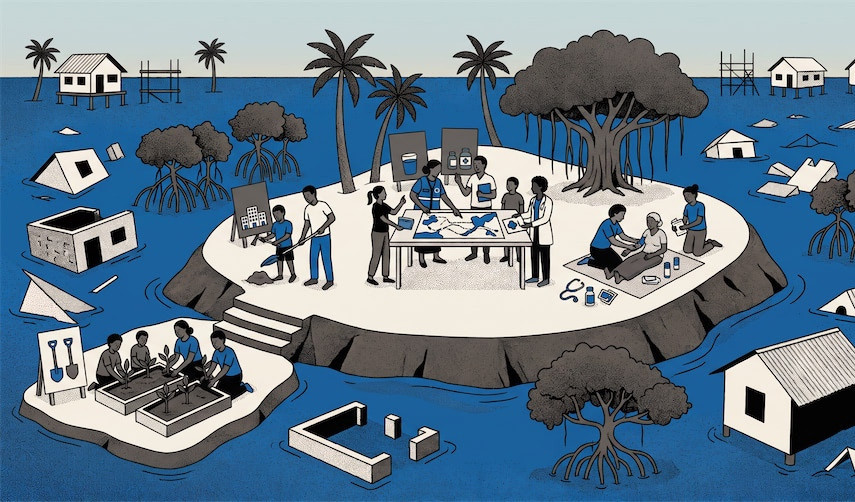
The last time a flood hit your community, what did you do?
A flood does not arrive as a health problem. It arrives as a closed road, a dead refrigerator, a well that now tastes of sewage. Then it becomes your problem, because you are the health worker the community reaches first. This course is about what you can do to prepare, respond, and recover to make your community stronger.
Enroll now. Then invite one person to join you.
Do not enroll in this course alone. Think of one colleague who faces similar challenges. Invite them. The course works best when you take it together. Invite your colleagues on WhatsApp, Gmail, Yahoo Mail, LinkedIn, Telegram, Facebook, or X/Twitter.
Who this course is for
Anyone who works for health and lives with flood risk is welcome. You do not need a special qualification, and you do not need permission from anyone to join.
Why this course exists
Global frameworks are strong on policy and weak in terms of what you can actually do to help your community. The course respects your experience as the starting point.
How this course works
You learn how you can better prepare, respond, and recover for floods in your area. You make a plan. And then you help three other participants improve their plans. And you get help from three participants too.
Three reasons to take this course
- You leave with a practical plan. Your course project is a flood readiness plan for your own area: a risk map naming at least five of your most vulnerable patients by name and place, a response protocol, and one resilience action stating who does what, starting when.
- The content comes from health workers, not from a desk. This course is built from flood experience shared in Teach to Reach, the world’s largest community where health workers share experience.
- You get a tool you can use under pressure. This course will help you implement the 7-30 Climate Health Emergency Framework for floods. Within 7 days of a flood watch or the start of the rainy season, your area is confirmed prepared, and within 30 days of a flood, essential services are restored or adapted and at least one resilience action has started.
What guides the course?
The course is a tool for implementation. It references:
- WHO Health Emergency and Disaster Risk Management Framework.
- WHO Operational Framework for Building Climate-Resilient and Low-Carbon Health Systems, including One Health.
- The Sphere Handbook minimum standards, including 15 litres of safe water per person per day.
- The Belem Health Action Plan, the first global climate adaptation plan centred on health, which explicitly recognises the value of local knowledge.
These frameworks set the floor. They do not speak for your area. You do.
Certification
You can earn a Certificate of Contribution from The Geneva Learning Foundation. It documents the work you produced and shared with colleagues, not the hours you sat in front of a screen. It opens the next steps in the Certificate peer learning programme for leadership in climate change and health.