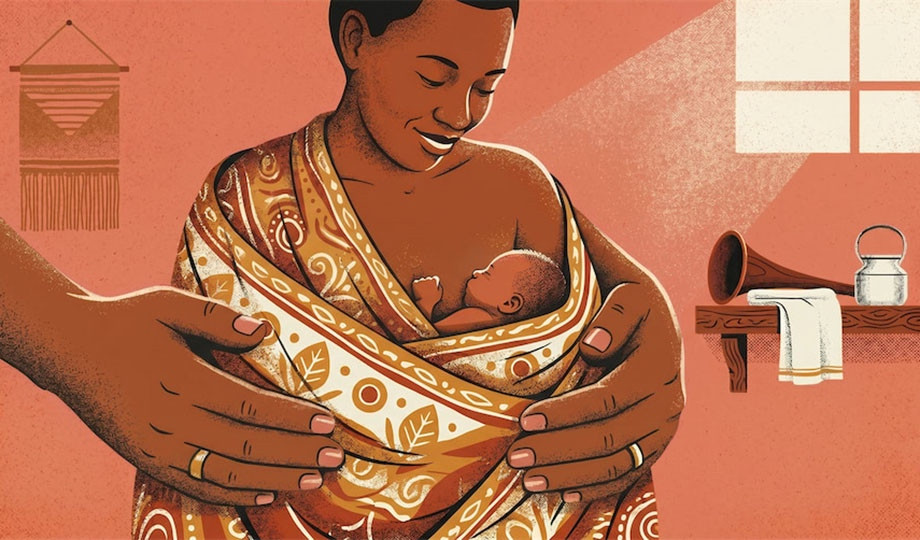
Practical actions for newborn survival is an open access (free), text-based peer learning course that teaches the practical, hands-on skills health workers need to save newborn and maternal lives when resources are limited.
Enroll now. Then invite one person to join you.
Do not enroll in this course alone. Think of one colleague who faces similar challenges. Invite them. The course works best when you take it together.
Invite your colleagues on WhatsApp, Gmail, Yahoo Mail, LinkedIn, Telegram, Facebook, or X/Twitter.
Simple actions, done correctly, can save newborn babies
When the fetal monitor has no battery, the oxytocin is out of stock, and the nearest hospital is two hours away, how do you keep a mother and her baby alive?
Research confirms what experienced health workers already know. Simple actions, done correctly, save more lives than expensive machines.
- A health worker who can place a hand on a mother’s abdomen and feel whether her uterus has contracted will detect dangerous blood loss faster than one waiting for a monitor.
- A nurse who knows four specific signs of infection will act before a newborn’s sepsis becomes fatal.
This course is about those actions. It covers practical skills grounded in the highest global evidence, adapted for settings where resources are limited.
Who this is for
This course was designed for community health workers, nurses, and midwives working at the point of care, where electricity is not guaranteed, equipment breaks, and families sometimes say no. You have the guidelines. This course builds the practical skills to act on them when conditions are difficult.
For doctors and clinical officers
You already have the clinical training. This primer is not here to replace what you know. Managing a postpartum hemorrhage in a well-stocked hospital is different from managing it when you have only your hands and two ampoules of oxytocin. Diagnosing newborn sepsis with a full laboratory is different from reading the signs at the bedside. This primer focuses on that difference, and on the conversations and decisions that surround it.
What you will take back to your facility
Every skill in this primer points to one thing: acting at the right moment to save a life. You will leave knowing what to do, and why it works.
- Spot warning signs early: A newborn can move from stable to critical in minutes, and the early signs are often quiet. You will learn to read these signs before any test confirms them.
- Stop bleeding with your hands: Postpartum hemorrhage is a leading cause of maternal death, and your hands are often the first tool on the scene. You will learn safe, external actions that follow WHO guidance.
- Give every baby a stronger start: A small baby can lose dangerous amounts of heat and energy in the first minutes of life. You will learn the low-cost actions that WHO and UNICEF recommend through the Every Newborn Action Plan.
- Help families say yes to care: Many newborns die because a family refuses referral, and the real reason is rarely a rejection of medicine. It is often money, transport, or fear.
- Practice in your own facility: You will try three short activities in the place where you work, so the skills stay in your hands.
How this course is different
Most courses give you content and send you away. You return to work full of new ideas but face the same obstacles, the same broken equipment, and the same difficult conversations.
You feel alone with your challenges. This is what happens when learning ends at the moment of completion. This primer is built differently. Three things make it different.
- It is peer learning, not a lecture. You learn alongside health workers in other countries who are facing the same problems. You complete a short reading, you do an activity in your own facility, and you note what you found. You read what colleagues elsewhere found. You update your thinking based on their experience. The learning comes from the network, not from a single expert handing down instructions. There are no videos to watch, no live sessions to attend, and no fixed schedule.
- It is focused on action. Every reading is built around a specific action you can take when you return to work. Every activity asks you to do something practical and notice the result. The goal is not to memorize. The goal is to act and to share what happened.
- It is the start of an ongoing journey, not a single event. The primer is the gateway. It activates the network and gives every practitioner a shared vocabulary.
Complete this primer to start your maternal, newborn, and child care journey.
AFter the primer, the learning continues through three more stages of the mother and newborn care programme:
- The peer learning exercise. A 16-day structured process where you turn your experience into a written, peer-reviewed action plan to address one specific challenge in your facility.
- The Impact Accelerator. A longitudinal weekly rhythm to implement your plan with local resources. Each Monday you set one specific goal. Each Wednesday you check in with peers. Each Friday you report on what happened. Step by step, you create real change, accountable to colleagues rather than to a boss.
- Teach to Reach. The ongoing community of practice. You join live sessions, share experience, support colleagues, report progress on your work, submit your own challenges for problem-solving, and help others solve theirs. This is where the connections you make in the primer keep growing for years.
You do not have to commit to all four stages now. You begin here. The primer makes the next steps possible.
Standards and guidance you can trust
This primer is developed by The Geneva Learning Foundation and is built on the highest global standards from the World Health Organization and UNICEF, including the Every Newborn Action Plan, Helping Babies Breathe, and Essential Newborn Care. Every skill reflects current evidence, adapted for low-resource settings.
Time and effort
The primer takes approximately eight hours to complete over four weeks. You work at your own pace, on any device, without a heavy data connection. You do not attend scheduled sessions. The three practical activities are designed to fit into a working day. You do not need special materials.
Certification
When you complete this primer, you receive a Certificate of contribution from The Geneva Learning Foundation (TGLF). This is not a certificate for clicking through screens. You can use it to secured continuing professional development (CPD) credit in your country. It documents the practical work you completed: the activities you carried out in your facility, the skills you practiced, and the observations you shared with the learning community. This certificate is designed to be meaningful to employers, supervisors, and institutional partners. It reflects professional engagement, not attendance. Completing this primer also qualifies you to enroll in the Peer learning exercise and, from there, the Impact Accelerator. It is the door to the full programme.