

Climate change and health: a new partnership to connect Pastoralist community health workers in Tanzania to a global peer learning network
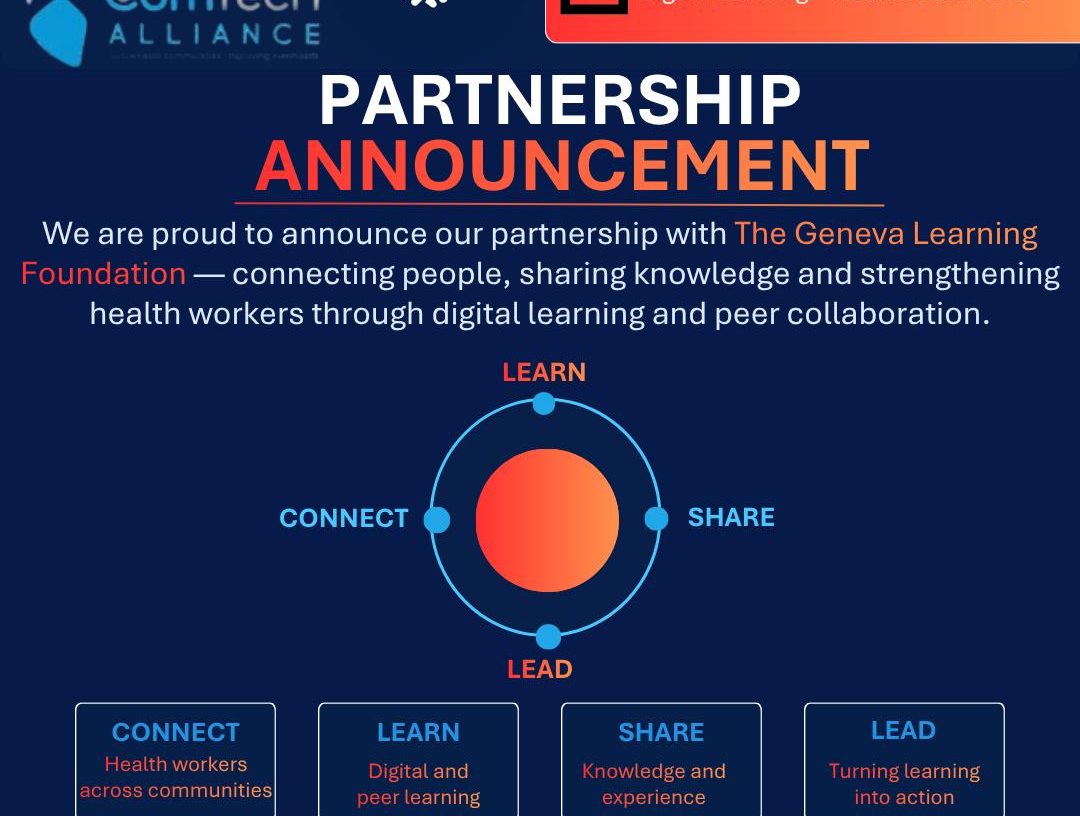
ARUSHA and GENEVA, 10 September 2026 – ComTech Alliance, a Tanzanian nonprofit working with semi-nomadic pastoral communities facing heat stress and drought, and The Geneva Learning Foundation (TGLF) have signed a three-year agreement opening TGLF’s peer learning programmes to community health workers in semi-arid Tanzania. TGLF connects more than 80,000 health practitioners in more than 137 countries, including remote rural districts on three continents. Pastoralist Tanzania is not among them.
The community health workers who serve Tanzania’s semi-nomadic pastoral communities are managing a climate emergency.
They have few ways of learning from colleagues facing this emergency in other countries, and colleagues in other countries have no way of learning from them.
This agreement exists for one reason: to open that connection in both directions.
What pastoral communities face
When the rains fail in the semi-arid districts where ComTech Alliance works, pasture and water go first.
Herds move further and thin out.
Vegetables cannot be grown in heat and without water, and in communities where meat and milk have always been the protein a family relies on, losing the herd and losing the garden happen at the same time.
Children begin the season undernourished and end it worse.
Community health workers who see those children have a strong culture of resilience and solidarity, rooted in the history of their communities.
Their experience of what it takes to survive and thrive is valuable knowledge.
What peers are ready to offer
TGLF’s peer learning works on one principle: the people closest to a problem are each other’s most useful teachers, and what they know only becomes usable when it is written down, attributed, and shared.
Over five years, the Teach to Reach community has accumulated over 10,000 such accounts.
Three of them show what colleagues in other drought- and flood-exposed districts are ready to offer a first cohort from Tanzania.
A health professional in Yemen wrote about a neighbouring drought-affected district:
“We observed a significant increase in the severity and frequency of diarrhea, pneumonia and measles. A malnourished child could not fend off a simple infection, and a minor infection could push a moderately undernourished child into severe, life-threatening malnutrition. It created a devastating cycle. If we only treat the diarrhea or measles without understanding the root cause, we are failing our patients.”
A nurse in the Democratic Republic of the Congo wrote about a malaria response that village women organised themselves:
“What inspired me most was that this action did not come from an official order. The community itself, led by these women, took the initiative.”
A programme manager in Nigeria wrote about what changed in his own practice, and then produced a one-page Rain-Day Service Continuity Protocol setting early clinic hours on forecast rain days and prepositioning vaccines:
“Learning to map how floods disrupt transport, cold chain, staffing, and caregiver access shifted my identity from program implementer to systems steward.”
These colleagues are not speaking for Tanzania and cannot.
What their accounts show is that the exchange this agreement opens has something waiting on the other side of it, and that the exchange is only peer learning if it runs the other way as well.
No account from a pastoralist district in Tanzania sits in that collection today.
The experience exists.
The route to share it does not.
What ComTech Alliance opens
ComTech Alliance works with these communities in partnership with a community-based organisation.
That relationship has its own history, which includes adaptive leadership workshops the two organisations ran together in 2025.
It is the community organisation, not ComTech Alliance and not TGLF, that community health workers in these districts know and trust.
Dr. Devotha Godfrey Nyambo, Founder and Executive Director, ComTech Alliance, said:
“For me, I want the community health workers to have the ability to respond at their own level, instead of waiting for intervention from the government. This is in the spirit of our advocacy for adaptive leadership that we trained local leaders in the pastoral communities”
Professor Karen E. Watkins, President, The Geneva Learning Foundation said:
“Our network reaches remote rural districts in more than 137 countries and still has nothing from a mobile pastoral population facing this. That is our gap, not Tanzania’s. What we expect from this partnership is that, from sharing experience, everyone finds new ways to strengthen their local action.”
What is the value of a global peer learning platform for local action?
Community health workers reached through this agreement gain open access to Teach to Reach, TGLF’s peer learning platform, and to the Impact Accelerator, in which participants set one goal on Monday, check in with peers on Wednesday, and report on Friday what happened, including what failed.
They also gain the 7-30 Climate Health Emergency Framework and its free Level 1 certification course.
The framework sets two numbers a health worker can hold under pressure: within 7 days of a seasonal or forecast trigger, the local area is confirmed prepared.
Within 30 days of an event, essential services are stable again and one action is under way that makes next time easier.
TGLF’s Director of Programmes, Charlotte Mbuh, explained:
“The 7-30 framework was not designed for these communities from a distance. Every preparedness action in it traces back to something a community-based health worker in Africa, Asia, or Latin America actually did and wrote down, over three years of structured listening. That is why it is worth offering here – and also why it is incomplete. Pastoralist experience is not yet in it. If local action is supported but the ideas still come from elsewhere, it is not local action.”
About the partners
ComTech Alliance (Sustainable CommunityTech Alliance) is a Tanzanian nonprofit registered in Arusha that connects communities with practical, technology-driven solutions across agriculture, health, and education. It works with diverse groups in its programs including in-school digital, computing and AI lessons, youth mentorship in digital innovation, farmers in Tanzania’s dairy hotspots on the use of AI-enabled on-farm decision support tools. Opening its health portfolio, ComTech Alliance integrates climate x health as a priority in semi-nomadic pastoral communities in semi-arid Tanzania. This will be done through a local partnership with a community-based organisation that holds a direct, established relationship with those communities, the LOKEEN. ComTech Alliance is founded and led by Dr. Devotha Godfrey Nyambo, where her research is grounded on AI-enabled solutions for enhancing agricultural production for smallholder farmers, education technologies and climate-driven disease surveillance.
The Geneva Learning Foundation (TGLF) is a Swiss nonprofit founded in 2016. It develops and runs peer learning-to-action programmes: courses and events in which health and humanitarian practitioners share what they have done in their own districts, learn from what colleagues elsewhere have done, and act on it. Its network spans more than 80,000 practitioners in more than 137 countries, concentrated in West and Central Africa. Teach to Reach, launched in 2021, is its peer learning platform, network, and community. The Impact Accelerator is a facilitated weekly cycle of goal-setting and peer reporting. In a January 2020 comparison, cohorts using this method implemented what they learned seven times faster than a comparison group with similar starting characteristics. The 7-30 Climate Health Emergency Framework, released in 2026, is grounded in three years of documented experience from community-based health workers in Africa, Asia, and Latin America, and is offered with a free certification course.
Media contacts
- For ComTech Alliance: Dr. Devotha Godfrey Nyambo, Founder and Executive Director, devotha.nyambo@comtech-alliance.org
- For TGLF: Claude Cardot, Communications manager, claude.cardot@learning.foundation, +41 77 231 96 91