
“If my field project works, I expect to vaccinate at least 345 children.”
This promise did not come from a minister in the capital. It came from Jérémie Mpata Lumpungu, a nurse in Kasaï province.
He was not alone.
On Monday, November 10, 2025, a call went out across the Democratic Republic of the Congo.
From Kinshasa, Dr Josaphat-Francois WETSHIKOY, an epidemiologist, shared his goal for the next 21 days: “reach 30% of unvaccinated children” in his target area of 230,000 people.
Barthélemy Daké Saoromou, planning a mobile strategy, aims to reach “more than 500 zero-dose children.”
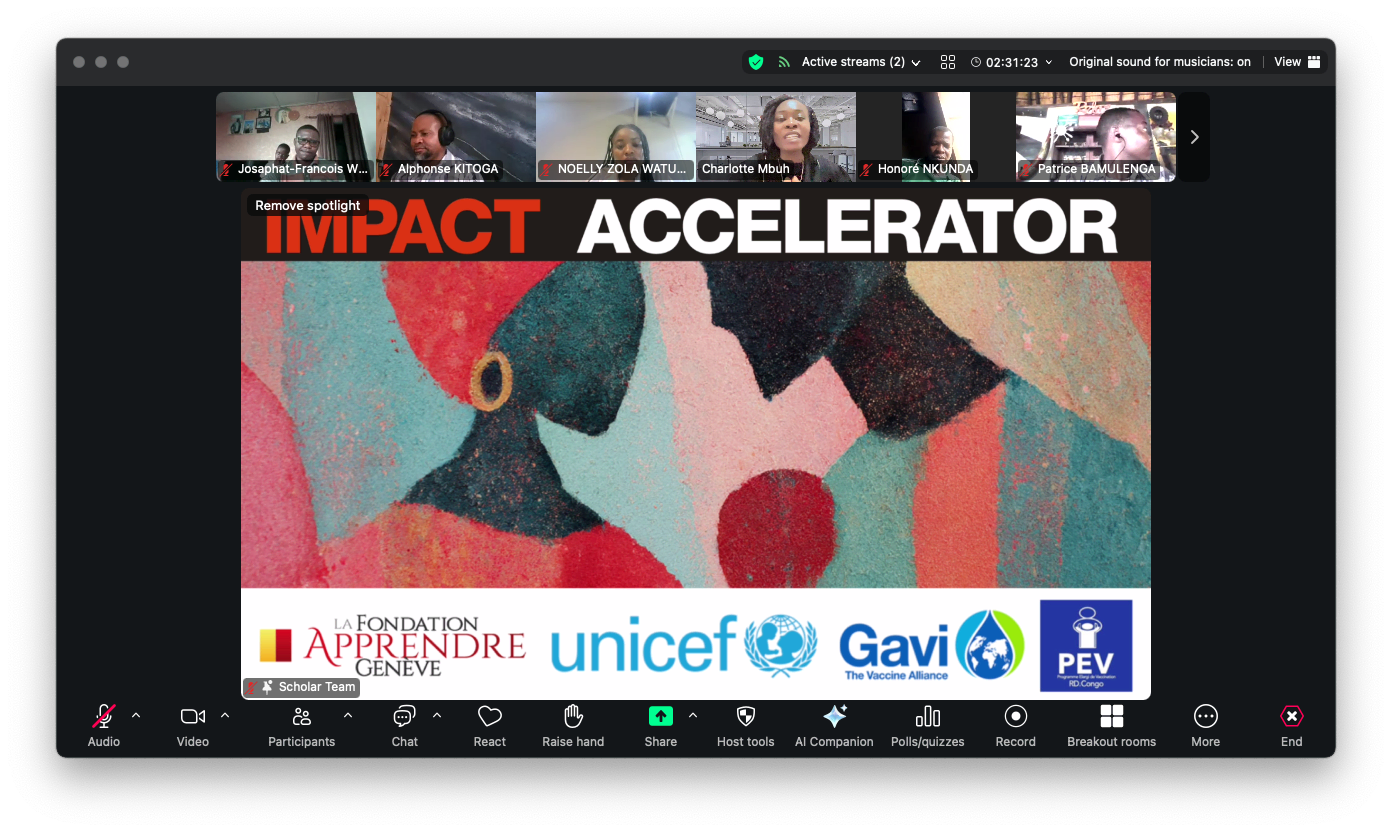
This clear determination from health workers across the country marked the launch of the “Zero-Dose Impact Accelerator.”
This is not another training or workshop.
It is a new phase of action. It is a “support system” for doing the work and tracking progress. The Geneva Learning Foundation (TGLF) designed it in partnership with UNICEF, with support from Gavi, and under the Democratic Republic of the Congo’s Expanded Programme on Immunization (EPI). Learn more…
Want to join the next Accelerator session? Follow this link.
For the people taking part, it is a “baptism by fire.”
From seeing the problem to taking action
This new push for vaccination did not come from nowhere.
It builds on lessons from a large peer learning effort. More than 1,600 Congolese health workers took part. They developed 385 field projects.
The findings from this work, shared at the launch, were honest and direct.
The most important finding: the problem of zero-dose children in the DRC is mainly “a problem of management and relationships.”
Health workers looked more closely at the official reason given in the Mashako plan. The plan says the main problem is that “the mother is too busy.”
For these health workers, the “real cause, the root cause, is that the health system fails.” It is a system that “does not adapt its services […] to the real lives and work of parents.”
Their work also found a problem with how Community Liaisons (RECO) are managed. These workers feel “overlooked or left out of planning.” Mistrust grows “when the health system fails in specific ways,” such as poor handling of vaccine side effects.
From national level to local health facility
The people making these commitments have names and faces.
The strength of the Accelerator comes from the mix of people in it.
Participants include doctors (such as Dr Derrick Ngoyi MALOBO at the Kenge health center), nurses (such as Marlène KAPINGA MULUMBA at the national level and Jérémie Mpata Lumpungu at the local level), public health officers (such as Bonnet Leteta in the province), and many community health workers (such as Martine YOWA NDAYE and David BINWA in their health areas).
They represent every level of the system. From the national level in Kinshasa to the most remote health center. They work at the provincial level and the health zone level.
They come from government (most participants), civil society organizations (NGOs), and the private sector.
This alliance of health workers, from top to bottom, is now taking action.
Action by Friday
The Accelerator turns what workers see in the field into action right away.
First, each person sets a goal for 30 days.
The goal must answer five questions. Which community will you help? How many zero-dose children live there? Who will work with you? What is the main problem? What result can you measure in one month?
Next comes the core of the program. Every Monday, each person picks one action they can do that week. It must be specific. It must be doable. They promise to finish it by Friday.
At the launch, people made real commitments for the week ahead.
Noëlly Zola Watusadisi is a doctor in the Bombay health zone. She works with 12 river islands. Her action for the week is not to do everything at once. It is to start. She will contact the nurse on each island. She will call neighborhood leaders to prepare for community talks.
David Binwa works in North Kivu. His plan is similar.
His action by Friday: meet with the Community Liaisons by Thursday. Find out the real problems. Then start talking to the community.
The check-in: peers hold each other accountable
The Accelerator works because of one final part. Peers hold each other accountable.
This Friday, each person fills out a short form. It has three questions.
First: Did you vaccinate any zero-dose children this week?
Second: How much did you finish of your action for this week?
But the real test comes next Monday at the group meeting.
Charlotte Mbuh works with the group. She told them what to expect. “Next Monday at the meeting, your colleagues will look for you. They will ask: Is that person here? The one who said they would do something last week? If you are not there, they will notice. If you are there, they will ask: Did you do it?”
This pressure is not punishment.
The goal is to help each other and work together.
To support this Congolese Movement for vaccination by 2030, the Foundation brought in 167 ambassadors at the ceremony.
These are health workers from the field. They will help people support each other.
The Accelerator has launched.
The first commitments are made.
The countdown to next Monday has started.
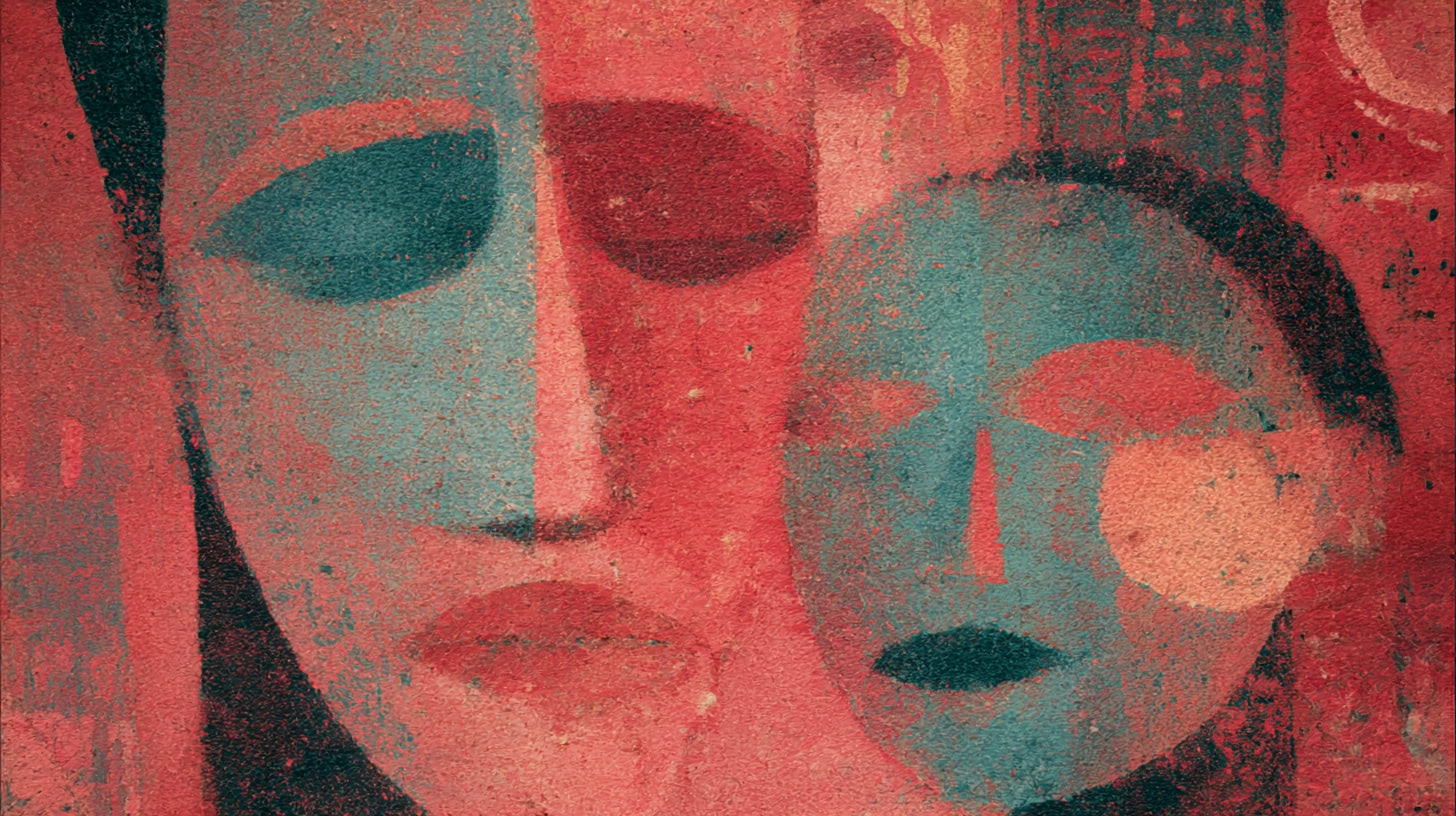
Image: Collection of The Geneva Learning Foundation © 2025. The image “Echoes of Care” shows two faces like shared memories. They are fragile but strong. Simple shapes and mixed colors show tenderness, tiredness, and the quiet strength of caring. Care leaves a mark on those who give it and those who receive it.