
What do a rapid test, a preventive medicine, and a bed net have in common?
Every one of them, somewhere, has met a parent who said no.
The tools work.
So how can such a conversation go wrong?
We just finished reading what happened inside the first French-language run of our “Malaria: turning the tide” peer learning course.
Every participant wrote up a real case from their own practice, then gave feedback to colleagues.
Practitioners from more than twenty countries took part, and the largest group by far works in the Democratic Republic of the Congo.
This is the rarest kind of data from local communities, and it came from health workers who wrote it down themselves.
Here’s the first thing they taught us.
The most common obstacle they described wasn’t cost, or stock-outs, or distance to a clinic.
It was the hours or days a family spends treating a fever at home before anyone qualified sees the child.
Issoufou Ilboudo in Burkina Faso describes a 13-year-old with a high fever at night:
“The first thing done was self-medication, taking a paracetamol. That continued through the evening and the next day, without consulting a practitioner”.
Now the part I didn’t expect.
We asked what they actually did about problems like this.
Just over one in four described sitting down one to one with a drug seller or a traditional healer.
Just under one in four described running an awareness session.
The quiet conversation was the more common answer, in just as many countries.
Read one of those conversations.
A drug seller tells Tamba Dissy Millimouno in Guinea:
“Doctor, families come to me first. If I send them straight somewhere else, they think I’m refusing to help them”.
Luckson Kividi Kikama in the DRC met the same fear and had an answer ready:
“He told me he was afraid of losing his customers if he systematically referred patients to health centres. I told him that patients’ trust is also built on the quality of the advice he gives. When a patient is referred in time and comes back cured, that strengthens the provider’s credibility rather than weakening it”.
Nobody trained him to say that.
He worked it out on his own, and now thousands of colleagues in The Geneva Learning Foundation’s new malaria network can read it and use it tomorrow.
The second thing they taught us is who actually decides.
Not “the community.”
A named person.
Mahadou Bakouan in Côte d’Ivoire:
“The father ordered that his children must not receive the SP-AQ medicines, even though they’re in the 3-to-59-month age group… he tells me these are rumours saying the medicines aren’t good for health”.
Aggregate acceptance surveys may miss this.
They measure how many people say yes.
They don’t tell you whose yes it was.
The third thing is the one I keep thinking about.
Plenty of these health workers spot a number that looks wrong and go check it.
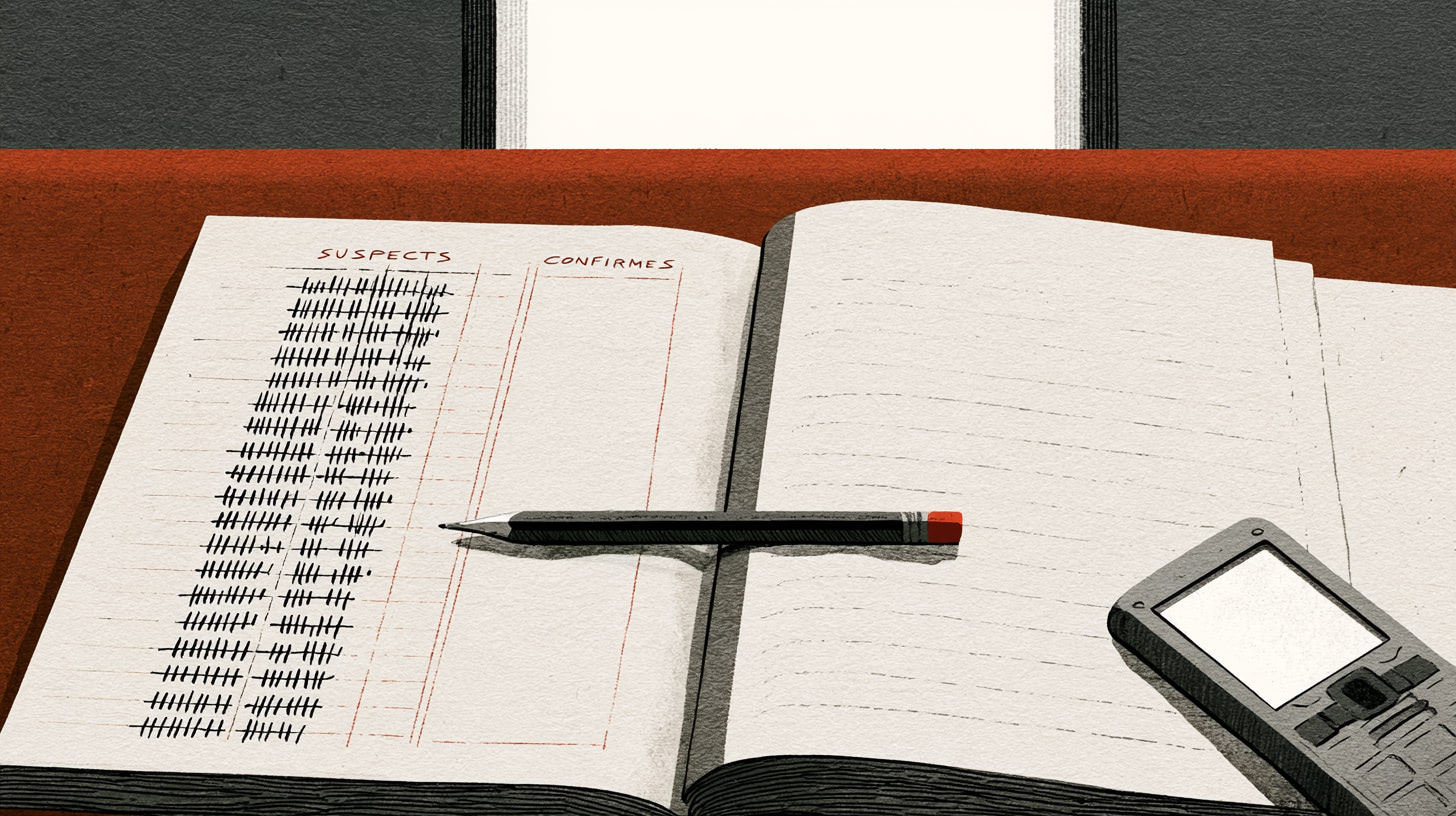
Millimouno pulled the consultation registers, called the community health workers, compared the neighbouring centre’s weekly report, and found the error: cases entered in the “suspected” column and never carried across to “confirmed”.
Maxon Delly, a data manager in Haiti, puts the principle plainly:
“My advice to a colleague is never to accept an unusual figure without comparing it with at least one other source, and without talking to the teams that produced the information”.
But for every ten people who described checking a suspicious number, only one described the decision that followed from the check.
The training gap isn’t in the checking.
It’s in the ten minutes after.
I should be straight about what this is: the people who wrote these cases are the most motivated members of the cohort, and most of them are clinicians rather than community health workers.
It isn’t a survey.
It’s something surveys can’t produce, which is a named person describing a specific decision in a specific place.
Which brings me to why we’ve just published a primer on new tools to fight malaria – better nets, devices that protect a whole room, new medicines and vaccines, and approaches that work on the mosquito itself.
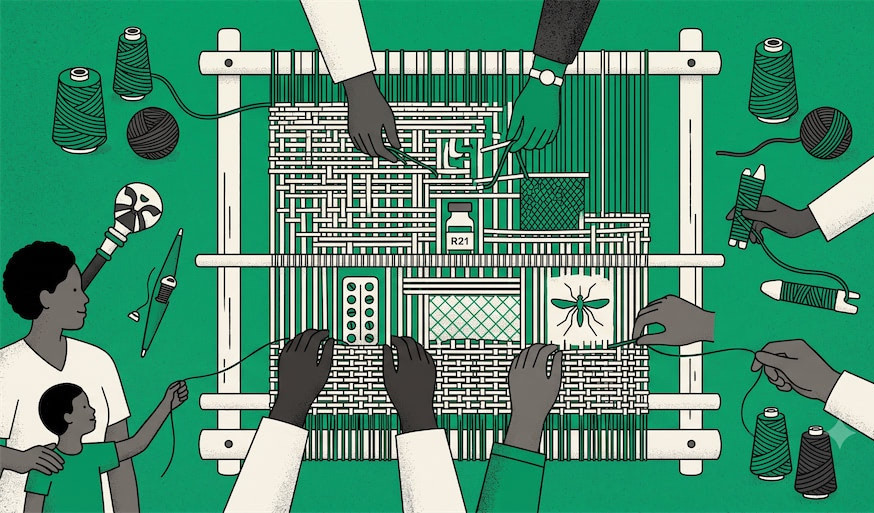
New malaria tools: learn, take action, and get certified
Share your experience and learn from colleagues about new tools to fight malaria. Learn more and enrol in this certification from The Geneva Learning Foundation: MALARIA-EN-02 Malaria: New tools to turn the tide
Its first module teaches no tool at all.
It teaches five questions a health worker can ask about any tool, old or new, and a section for every tool called “What this tool is NOT”.
Some of what’s coming has never been introduced anywhere, so nobody can tell you from experience how families will respond.
What people can tell you, in their own words, is how they introduced the last one.
That experience is the only asset we have for the next one.
When it’s written down, it belongs to people who are reachable by name.
The primer is free, in French and English, and it’s meant to be adapted and translated by anyone who can use it.
If you work on new malaria tools, read the first module and tell me what a health worker would still be unable to answer.
I’d rather hear that now than after the next refusal.